MAKE SURE YOUR DENTIST IS AN ADA MEMBER!: ADA Members Adhere to Strict Code of Ethics and Conduct. You should make sure you are SEEING AN ADA MEMBER DENTIST! Visit ADA Find-A-Dentist to Find One Near YOU
Ninth District Headquarters Office - Hawthorne, NY

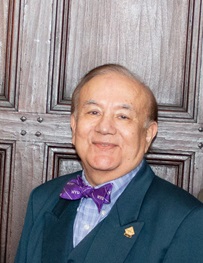
2026 Ninth District President

Dr. Bharat Joshi

RENEW YOUR MEMBERSHIP TODAY!

3 EASY WAYS TO PAY 1 ONLINE: nysdental.org/renew 2 MAIL: Return dues stub and payment 3 PHONE: 1-800-255-2100

NYSDAPAC

NYSDA’s fully owned and operated Political Action Committee. With your support, NYSDAPAC will strengthen our political influence and ensure your voice is heard statewide and beyond.

2026-2027 Member Benefits Guide Now Available

Explore your member benefits! Take a look at the benefits, resources, savings, and opportunities included with your NYSDA membership. Plus, get a quick overview with our convenient At-A-Glance one-pager. Discover everything your membership has to offer!

Member Assistance Program (MAP)

Life comes with challenges—but your FREE, confidential Member Assistance Program (MAP) is here to help. Available to you, your household, and your staff, MAP offers one-on-one short-term counseling plus resources for mental health, stress management, financial wellness, and life coaching. Download the app today to get started.

Welcome to the Ninth District Dental Association

The Ninth District Dental Society was formed in 1909 and renamed to the Ninth District Dental Association in 2002. We have a membership of over 1200 dentists in 5 counties: Westchester, Rockland, Dutchess, Orange and Putnam.

In its quest to serve both the public and the profession, the Ninth District embodies the highest ideals.

The mission of the 9th District Dental Association is to serve and support its members and the public by improving the oral health of our community through Advocacy, Continuing Education and Camaraderie.


The 9th Board approved creating a High School Career Day video to promote the dental field as a whole! Here's the link: 


https://drive.google.com/file/d/1Kk10wFBk5MXT4CeitvzzCSXKPrVFzz73/view?usp=drive_link


Please share it with any Principal or Guidance Counselor you may have a relationship with!


Come join your colleagues!


New Dentist Reception

Wednesday, October 21, 2026
6:30 - 9:00 pm

Captain Lawrence Brewery
444 Saw Mill River Rd
Elmsford, NY  10523
914-741-2337

To register, email:
stephan@ninthdistrict.org

We Hope to See You There!!

Bharat Joshi, D.D.S.
President

Lana Hashim, D.D.S.
President - New Dentist Committee

And don't forget to register for Dr. Amrita Patel's CE Course:

Live Webinar:  “Demystifying Dental Benefits” Tuesday, September 29, 2026 – 7-9 pm (Objective 12 Practice Management / 2 CE)

Register

 Instructor:           Amrita Patel, D.D.S.

 Synopsis:  Dental insurance touches every single patient conversation and every line of your P&L, yet most dentists, regardless of how long they've been in practice, were never actually taught how the system works. This course pulls back the curtain on dental benefits: how plans are structured, how codes get created and valued, where fee schedules come from, and where the gaps between "covered" and "paid" quietly erode practice revenue and patient trust.

 Drawing on years of first-hand experience navigating dental benefits from both the clinical and business sides, this session goes beyond the front-desk basics. New dentists will walk away finally understanding a system that clinical training never covered. Seasoned owners and multi-practice leaders will leave with sharper language for fee negotiations, a clearer read on where their practice is leaving money on the table, and concrete strategies for protecting fee integrity as insurance pressures intensify. Whether you're building your first associate contract or running a multi-site group, this is the insurance education dental school skipped: built for every stage of the career, not just the start of it.


GAO Issues Report on Wearable Health Care Technology

Aug 6, 2026

Wearable Technologies: Potential Benefits and Challenges in Clinical Decision-Making

United States Government Accountability Office (GAO)

GAO-26-107847  Published: Aug 06, 2026.  Publicly Released: Aug 06, 2026.

Fast Facts

Wearable devices with health-related features, such as glucose monitors and smartwatches, are growing in popularity.  In this technology assessment, we reviewed how clinicians can use data from wearables to help diagnose and treat patients—and how AI might expand what such devices can achieve.  Wearables rely on sensors to collect data on users.  This data may allow clinicians to give patients more timely and personalized treatment.  Wearables may also help underserved populations by expanding remote patient care.  But devices vary in reliability and can be difficult to integrate into clinical work.  We offer three policy options that could help.

Highlights

What GAO Found

Wearable devices (wearables) with health-related features have the potential to be used in clinical decision-making (see figure).  Wearables can be either medical or wellness devices, and their features can be augmented by artificial intelligence (AI).  Wearables use sensors to track vital signs and establish patient health baselines; alert users, caregivers, or clinicians of medical events or suggested lifestyle changes; and provide additional assessments of user data that can be sent to a clinician for interpretation.  Clinicians could use such data as a source of information when diagnosing and treating patients.

Examples of wearables that could be used in clinical decision-making
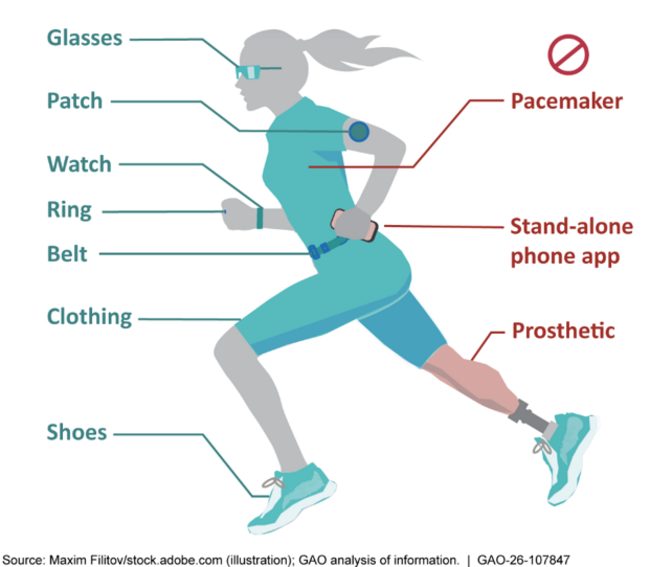
Examples of wearables that could be used in clinical decision-making

Wearables increase the amount of information considered during clinical decision-making, which may allow for quicker diagnoses by clinicians, more personalized care plans, and improved patient compliance.  Wearables may also benefit underserved populations by expanding remote patient monitoring.  However, wearables vary in accuracy and reliability.  AI has the potential to increase the capabilities of wearables by, for example, improving autonomous decision-making.  However, the extent to which wearables will be able to make clinical decisions autonomously is unclear at this time.  GAO identified challenges to using wearables for clinical decision-making, including challenges related to ensuring wearables benefit patients as intended, integrating wearables into clinical workflows, and navigating the health technology market.  GAO developed three policy options that could help address the challenges and enhance the benefits of using wearables in clinical decision-making.  The first is the status quo, whereby policymakers would continue with current efforts and activities in the field.  The other two policy options identify possible new actions by policymakers, which may include legislative bodies, government agencies, standards-setting organizations, industry, and other groups.  See below for details of the policy options and relevant opportunities and considerations.

Policy Options Help Address Challenges with Use of Wearables in Clinical Decision-Making


Continue the status quo (report page 24)

Policymakers could continue ongoing digital health technology activities, and policymakers outside of government could continue voluntarily testing the use of wearables for clinical purposes.


Opportunities

  • Monitoring and assessing recent and ongoing activities related to digital health technologies, including wearables, may help address some of the challenges GAO identified.  Such challenges include ensuring patient health benefits, integrating wearables into clinical workflows, and navigating the health technology market.

Considerations

  • Some of the challenges GAO identified may remain unaddressed by recent or ongoing activities, and some activities may worsen some challenges.


Integration of wearables into clinical workflows (report page 26)

Policymakers could refine the clinical workflows and technology infrastructure of medical facilities to support the integration of wearables into clinical decision-making.


Opportunities

  • Improving clinical workflow integration could help establish common practices for receiving, responding to, and protecting patient health data, which could protect privacy and improve patient outcomes.
  • It could also help clarify clinician responsibilities surrounding the use of wearables data in clinical decision-making, which could ease liability concerns.

Considerations

  • Resource requirements for wearables integration could shift resources away from other priorities.
  • Patients and clinicians may experience variable results according to the local implementation strategy.
  • If administrators improve the integration of selected wearables, the use of wearables not selected may decline.


Improvements to wearables performance (report page 27)

Policymakers could incentivize manufacturers to improve the performance of wearables by building and maintaining a comprehensive public database of recommended wearables that have completed a selected, independent certification process.  Clinicians and patients could then use the database to help find certified devices.


Opportunities

  • Testing and disclosure of wearables performance could help medical facility administrators, clinicians, and patients make more informed decisions about the benefits and risks of selecting specific wearables.
  • Encouraging companies to maintain a certification may increase manufacturer testing of wearables’ effect on patient health and safety.

Considerations

  • Incentivizing participation in a certification process that is separate from the Food and Drug Administration’s review process may create confusion for wearables manufacturers, clinicians, and patients, with potential effects on patient safety.
  • Research and development costs may rise significantly, hindering the market for new wearables and potentially advantaging larger, established manufacturers.

Source: GAO. | GAO-26-107847

Why GAO Did This Study

Because wearables may facilitate more timely and personalized patient care, manufacturers and medical association representatives have suggested increasing their integration into clinical decision-making.  In addition, in 2025 leaders at the Department of Health and Human Services announced support for increasing the use of wearables in health care.  GAO was asked to review the potential role of wearables in clinical decision-making.  This report examines: 1) the potential benefits and challenges of using wearables in clinical decision-making; 2) the potential benefits and challenges of using AI to augment the decision-making capabilities of such wearables; and 3) what policy options might help address challenges and enhance benefits associated with the use of wearables in clinical decision-making.  To conduct this engagement, GAO reviewed scientific literature, federal agency guidance, and other documents; interviewed a wide range of stakeholders and agency representatives; and conducted site visits to laboratories, medical and research centers, and manufacturers to better understand these technologies.

Full Report


Latest News Around the Ninth


Around the Ninth District