
MAKE SURE YOUR DENTIST IS AN ADA MEMBER!: ADA Members Adhere to Strict Code of Ethics and Conduct. You should make sure you are SEEING AN ADA MEMBER DENTIST! Visit ADA Find-A-Dentist to Find One Near YOU
Ninth District Headquarters Office - Hawthorne, NY

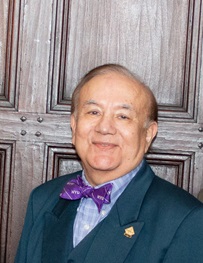
2026 Ninth District President

Dr. Bharat Joshi

RENEW YOUR MEMBERSHIP TODAY!

3 EASY WAYS TO PAY 1 ONLINE: nysdental.org/renew 2 MAIL: Return dues stub and payment 3 PHONE: 1-800-255-2100

NYSDAPAC

NYSDA’s fully owned and operated Political Action Committee. With your support, NYSDAPAC will strengthen our political influence and ensure your voice is heard statewide and beyond.

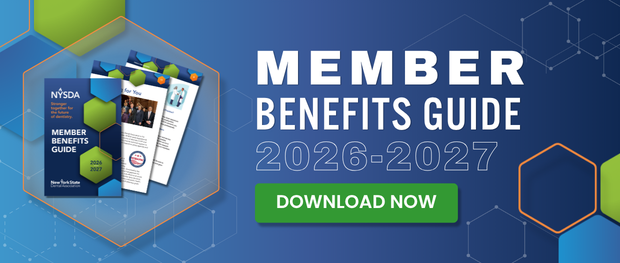
2026-2027 Member Benefits Guide Now Available

Take a look at the benefits, resources, savings, and opportunities included with your NYSDA membership. Plus, get a quick overview with our convenient At-A-Glance one-pager. Discover everything your membership has to offer!

Member Assistance Program (MAP)

Life comes with challenges—but your FREE, confidential Member Assistance Program (MAP) is here to help. Available to you, your household, and your staff, MAP offers one-on-one short-term counseling plus resources for mental health, stress management, financial wellness, and life coaching. Download the app today to get started.

Welcome to the Ninth District Dental Association

The Ninth District Dental Society was formed in 1909 and renamed to the Ninth District Dental Association in 2002. We have a membership of over 1200 dentists in 5 counties: Westchester, Rockland, Dutchess, Orange and Putnam.

In its quest to serve both the public and the profession, the Ninth District embodies the highest ideals.

The mission of the 9th District Dental Association is to serve and support its members and the public by improving the oral health of our community through Advocacy, Continuing Education and Camaraderie.


The 9th Board approved creating a High School Career Day video to promote the dental field as a whole! Here's the link: 


https://drive.google.com/file/d/1Kk10wFBk5MXT4CeitvzzCSXKPrVFzz73/view?usp=drive_link


Please share it with any Principal or Guidance Counselor you may have a relationship with!


Come join your colleagues! 
ANNUAL MEETING 
Wednesday, November 18, 2026

Westchester Country Club
99 Biltmore Avenue - Rye, NY 10590

Young K. Kim, D.M.D., DMSc
Clinical Assistant Professor, NYU Dentistry, Dept. of Prosthodontics

Chair-Elect - Academy of Distinguished Educators 

Course Director - Post-Graduate Fixed Prosthodontics

Chief-Editor - NYU Implant Restorative
 
Dr. Kim has no financial relationships relevant to this presentation to disclose.

 Craftsmanship-Driven Oral Rehabilitation: From Surgical Reconstruction to Computational Intelligence

 Course Objectives

This full-day program explores contemporary oral rehabilitation through the integration of prosthetic craftsmanship, surgical reconstruction, regenerative science, and emerging artificial intelligence. Part I focuses on diagnosis, treatment planning, and prosthetically driven strategies for complex full-arch rehabilitation. Part II addresses clinical execution, tissue architecture, biomechanics, provisionalization, and definitive reconstruction. Part III examines mechanotransductive regeneration, highlighting how mechanical forces, biologic signaling, and the local biomechanical environment influence bone regeneration and implant-related reconstruction. Part IV, Artificial Intelligence and Computational Surgical Intelligence: The Forthcoming AI Era and Its Impact on Clinical Practice, explores the evolution from digital dentistry to AI-enabled care, including deterministic algorithms, machine learning, robotics, and computational surgical intelligence. Through clinical cases, translational research, and emerging technologies, attendees will gain a framework for connecting craftsmanship, biomechanics, regenerative science, and computation in contemporary reconstructive dentistry.

REGISTER


OCR Clarifies Privacy Rules for State Medicaid Programs

Sep 29, 2026

Office for Civil Rights (OCR) Clarifies Privacy Rules for State Medicaid Programs

Guidance Outlines When 42 CFR Part 2 Permits Using Substance Use Disorder Patient Records to Verify Community Engagement Exclusions

The U.S. Department of Health and Human Services (HHS) Office for Civil Rights (OCR) today issued guidance clarifying when the regulation on Confidentiality of Substance Use Disorder (SUD) Patient Records under 42 CFR part 2 (“Part 2”) permits a state Medicaid agency to use a Medicaid applicant’s or beneficiary’s SUD patient records protected under Part 2 to verify an exclusion from the community engagement requirement for Medicaid eligibility.

“This OCR guidance will help state Medicaid agencies use information they already have to identify individuals who are excluded from the community engagement requirement, while continuing to protect the confidentiality of SUD patient records as required by Part 2,” said OCR Director Paula M. Stannard.  “This new guidance helps ensure that state Medicaid agencies comply with Part 2 while also meeting their obligations to verify Medicaid eligibility — and without imposing unnecessary documentation burdens on eligible applicants and beneficiaries.”

OCR administers and enforces Part 2, which protects the privacy of certain SUD patient records (“Part 2 records”) and describes when and how Part 2 records may be used and disclosed.  Part 2 requirements generally apply to any federally assisted program that provides SUD diagnosis, treatment, or referral for treatment (“Part 2 programs”).  Some Part 2 requirements also apply to people and organizations who receive Part 2 records from a Part 2 program, such as health plans that pay for SUD treatment and government health benefits programs such as Medicaid.  The federal community engagement requirement generally requires certain adults (ages 19–64) who are Medicaid applicants or beneficiaries to engage in work, community service, or certain other activities for 80 hours per month, or be enrolled at least half-time in education, to be eligible for Medicaid.  However, certain categories of individuals are excluded from the community engagement requirement, such as individuals who are medically frail or otherwise have special medical needs (including certain individuals with SUD) and individuals who are participating in certain SUD treatment programs.  Federal law also requires a state to use reliable information it has available to verify the applicant’s or beneficiary’s compliance or exclusion without requiring the individual to submit additional information, where possible.  The new guidance is available at: https://www.hhs.gov/sites/default/files/ocr-faq-part-2-sud.pdf.  If you believe that your or another person’s health information privacy, civil rights, or conscience rights have been violated, you can file a complaint with OCR at: https://www.hhs.gov/ocr/complaints/index.html.


Around the Ninth District