MAKE SURE YOUR DENTIST IS AN ADA MEMBER!: ADA Members Adhere to Strict Code of Ethics and Conduct. You should make sure you are SEEING AN ADA MEMBER DENTIST! Visit ADA Find-A-Dentist to Find One Near YOU
Ninth District Headquarters Office - Hawthorne, NY

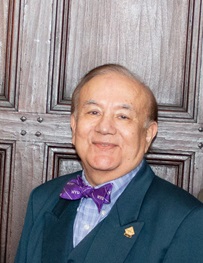
2025 Ninth District President

Dr. Renuka Bijoor

ADA Update: a new login experience

We’re updating how you log in to your NYSDA and ADA account.

RENEW YOUR MEMBERSHIP TODAY!

3 EASY WAYS TO PAY 1 ONLINE: nysdental.org/renew 2 MAIL: Return dues stub and payment 3 PHONE: 1-800-255-2100

Member Assistance Program (MAP)

Life comes with challenges, but your new Member Assistance Program (MAP) is here to help. This FREE, CONFIDENTIAL benefit is available to you and your household, offering resources and services to support mental health, reduce stress, and make life easier. Download the app today and get started.

Welcome to the Ninth District Dental Association

The Ninth District Dental Society was formed in 1909 and renamed to the Ninth District Dental Association in 2002. We have a membership of over 1500 dentists in 5 counties: Westchester, Rockland, Dutchess, Orange and Putnam.

In its quest to serve both the public and the profession, the Ninth District embodies the highest ideals.

The mission of the 9th District Dental Association is to serve and support its members and the public by improving the oral health of our community through Advocacy, Continuing Education and Camaraderie.


Latest News Around the Tripartite

AHRQ Issues Regulatory Update

Dec 2, 2025

December 2, 2025 | Issue #981

In This Week's Issue: behavioral health integration resources; best practices in patient safety; improving allergy alert systems; Primary Care Practice-Based Research Networks report; AHRQ’s investments in primary care research

New Tools and Resources To Strengthen Behavioral Health Integration

The AHRQ Academy for Integrating Behavioral Health and Primary Care has introduced three new tools to advance behavioral health integration:

  • Behavioral Health Integration (BHI) Ecosystem Directory: An interactive, searchable directory of organizations—including federal agencies, academic centers, and nonprofits—that can help providers, policymakers, funders, researchers, and others find the right partners to support their organization’s behavioral health integration goals.
  • Updated Integrating Behavioral Health and Primary Care Playbook: Now redesigned for easier navigation, the Playbook features clearer guidance on financing and payment strategies, whole-person care, and community engagement.  Access new content on electronic health record optimization, population health management, quality improvement, workforce solutions, and telehealth to enhance integration and reduce provider burnout.
  • Emerging Best Practices for Addressing Suicidality in Primary Care: The latest topic brief helps primary care teams identify and respond to suicide risk through practical, scalable interventions such as safety planning, crisis response, motivational interviewing, Caring Contacts, and integrating the 988 Suicide & Crisis Lifeline into routine care.

Access the directory, the playbook, and the topic brief to strengthen your practice’s approach to behavioral health integration.

Leaders in Patient Safety Share Best Practices

AHRQ’s National Action Alliance for Patient and Workforce Safety (NAA) has released a new resource, the Best Practices To Strengthen Safety Culture, Leadership, and Governance Change Package.  The NAA developed this package by identifying exemplar health systems in patient safety based on publicly available data, observing their practices on site, and engaging staff and leadership in dialogue to understand their approaches.  In a September NAA webinar, leaders from Houston Methodist, Mayo Clinic, and St. Luke’s University Health Network discussed the key elements of the change package—safety culture, leadership, and governance—and how these principles are applied in daily practice.  The panelists also answered questions on topics such as responding to safety events and communicating with staff.  At St. Luke’s, for example, a patient safety officer investigates serious safety events in real time.  “If it had a serious impact, we will convene the group within 48 hours and analyze the root cause,” said Donna Sabol, M.S.N., R.N., whose team also writes monthly thank-you notes to team members who report safety events.  For further insights and candid discussion of how to address real-world safety challenges, explore the change package.  Access the webinar recording.


Redesigned Drug Allergy Alert System Limits Interruption and Alert Fatigue

An AHRQ-funded study in BMJ Health & Care Informatics found that 72 percent of opioid drug allergy alerts were overridden by clinicians.  Researchers reviewed 700,493 opioid allergy alerts issued by clinical decision support systems across two major health systems in 2019.  Of the overridden alerts, 74 percent involved low- or medium-severity reactions, while 29 percent were linked to true immune-related allergies—the types most likely to cause serious reactions like anaphylaxis.  The findings suggest that many alerts may not reflect clinically significant risks.  Furthermore, the high number of low-risk alerts may be causing alert fatigue, making it harder for clinicians to recognize and respond to serious warnings.  The authors concluded that reclassifying alerts tied to low-risk, non-immune reactions—which represent up to 46 percent of currently interruptive alerts—could reduce unnecessary interruptions and help clinicians focus on truly critical warnings.

Access AHRQ’s Report on a Decade of Research Network Publications

AHRQ has released a report from its National Center for Excellence in Primary Care Research (NCEPCR) that catalogues the past 10 years of Practice-Based Research Network (PBRN) publications.  The Primary Care Practice-Based Research Networks and Publications, 2014–2023: Synthesis Report showcases the breadth and depth of PBRN research and demonstrates its value and impact.  This work contributes to NCEPCR’s vision of a future where all patients receive high-quality, whole-person, evidence-based, affordable primary healthcare from a healthy primary care workforce.  Accompanying the synthesis report is an Excel database containing the complete list of PBRN publications analyzed.  This filterable, sortable resource can help researchers, clinicians, and PBRNs identify publications by topic, network, and other data points.

New Report Highlights AHRQ’s 2023–2024 Primary Care Research Investments

In 2023 and 2024, AHRQ designated $84.1 million to new primary care research projects spanning fiscal years 2023–2029.  These investments aim to strengthen primary care systems, improve patient outcomes, address health disparities, and advance innovations that benefit patients, clinicians, and communities.  The agency’s second comprehensive review of recent primary care research investments is designed to inform and support primary care researchers, clinicians, and policymakers nationwide.  It offers updates from AHRQ’s National Center for Excellence in Primary Care Research, a high-level analysis of the agency’s primary care research portfolio, and summaries of grants and resources across nine key topic areas.  It also features impact stories and research profiles that spotlight projects with strong potential to improve primary care.  Access the report to learn more.

Register for Upcoming Webinars

AHRQ Stats: Prevalence of Lasting Symptoms After COVID-19

In early 2024, 3.4 percent of U.S. civilian, noninstitutionalized adults reported currently experiencing Long COVID, and 2.4 percent felt that their lasting symptoms limited their activity.  (Source: AHRQ Medical Expenditure Panel Survey Research Findings Report #53, Sources of Health Insurance among Adults with Long COVID: Estimates from the Medical Expenditure Panel Survey.)

AHRQ in the Professional Literature

Use of ChatGPT for urinary symptom management among people with spinal cord injury or disease: qualitative study.  Hose BZ, Rounds AK, Nandwani I, et al. JMIR Rehabil Assist Technol. 2025 May 29;12:e70339.  Access the abstract on PubMed®.

Patient perspectives on artificial intelligence in health care: focus group study for diagnostic communication and tool implementation.  Foresman G, Biro J, Tran A, et al. J Particip Med. 2025 Jul 24;17:e69564.  Access the abstract on PubMed®.

A multicenter randomized trial to improve family clinical note access and outcomes for hospitalized children: the Bedside Notes study protocol.  O'Hare C, Gatewood AK, Baird J, et al. J Hosp Med. 2025 Nov;20(11):1256–64. Epub 2025 Aug 21.  Access the abstract on PubMed®.

Factors influencing spiritual care for African Americans in hospice in the United States: an exploratory study of the perspectives of their caregivers, clergy and hospice chaplains.  Quigley DD, McCleskey SG, Lesandrini J, et al. J Relig Health. 2025 Aug 12. [Epub ahead of print.]  Access the abstract on PubMed®.

Qualitative verification of machine learning-based burnout predictors in primary care physicians: an exploratory study.  Tawfik D, Sebok-Syer SS, Bragdon C, et al. Appl Clin Inform. 2025 Aug;16(4):1031–40. Epub 2025 Apr 28.  Access the abstract on PubMed®.

Effect of comprehensive medication management on mortality in critically ill patients.  Sikora A, Min W, Devlin JW, et al. Crit Care Med. 2025 Oct;53(10):e1995-e2004. Epub 2025 Aug 6.  Access the abstract on PubMed®.

Federal investment in primary care transformation: a systematic review and qualitative analysis.  Sessums LL, Day TJ, Liu L, et al. JAMA Health Forum. 2025 Nov 7;6(11):e254117.  Access the abstract on PubMed®.

Development of a tool to measure the dyadic process of shared decision making in young children: the Making Decisions for Kids (MADE for Kids) Survey.  Opel DJ, Ayala E, Spielvogle H, et al. Med Decis Making. 2025 Oct;45(7):834–48. Epub 2025 Aug 8.  Access the abstract on PubMed®.


Latest News Around the Ninth


Around the Ninth District